Showing posts with label Switzerland holiday. Show all posts

Thursday, March 5, 2020


INTERLAKEN

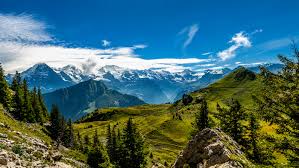
Couched between Lake Thun and Lake Brienz in the Bernese Highlands is the fabled resort of Interlaken. With a whole network of trains, funiculars, boats, cable-cars at your disposal, Interlaken can be your springboard for journeys into the the formidable Bernese Alps, ruled by three immense peaks: Jungfrau, Eiger and Mönch.
You can ride the highest railway in Europe up to Jungfraujoch to see these monsters and the Aletsch Glacier in all their majesty. And in the resort there’s a mountain of things to do like steamboat trips to waterfalls, hikes, kayaking, swimming, canyoning and even paragliding, all in front an awe-inspiring backdrop.

Top Things to Do in Interlaken 


PART 1

1. Harder Kulm

Interlaken’s own mountain can be ascended in little more than ten minutes via a funicular.In that short space of time you’ll climb more than 730 metres in a car with large windows showing the full beauty of the mountainous landscapes.At the upper station, at an elevation of 1322 metres an exhilarating scene will be laid out before you, from Lake Brienz and Lake Thun far below to the nearby Emmental Alps and the sky-scraping Bernese Alps like Eiger and Jungrau in the distance.The viewing platform projects over the slope and has a glass floor, and there’s also a panoramic restaurant up here in a Romantic medieval style.

2. Schynige Platte

Wilderswil on the southern fringe of Interlaken is the northern terminus for a 115-year-old rack railway that winds into the Bernese Alps.Despite its age the Schynige Platte Railway is still one of the highest lines in Switzerland, and needless to say the vistas of peaks and mountain pasture are breathtaking.The end goal is Schynige Platte, a ridge at 2,000 metres on the Schwarzhorn mountain.There are ample reasons to make the trip: To come to look down on Interlaken, which seems tiny from up here, and to view mountains like Schreckhorn, the northernmost European peak over 4,000 metres.There’s also an Alpine garden, with 650 flowering plants, another panoramic restaurant, and the ridge is the trailhead for short and long hikes to see more of Eiger, Jungfrau and Mönch.

3. Lake Brienz

Lake Brienz to the east of Interlaken has a turquoise tone and mountain views.Steamboats have been chugging across this lake since the 1830s and there’s now a small armada of five vessels from the first decades of the 20th century.These set off for destinations around the lake, like Giessbach, site of the castle-like Grand Hotel Giessbach and a waterfall that plunges 500 metres to the lake.The hotel is served by a funicular that goes back to 1879. And if you’re feeling fresh you could take a memorable walk or bike ride back along the southern shore of Lake Brienz in a few hours, or cross to Oberried and catch the train to Interlaken.

4. Lake Thun

In the west is Lake Thun, which has a deep blue colour and catches the prevailing breeze.So no wonder this lake is favoured by windsurfers and sailors, while the shore, enveloped by woodland, is dotted with bathing areas to entice you in summer.Out on the water, free of any obstruction you can bask in the superb panorama of Eiger, Mönch and Jungfrau.This is a sight that needs to be contemplated slowly, so catch a steamboat over the lake and spend some time in Thun.There’s much to love about this historic town, from the stately Schadau Park and Thun Castle to the cute Altstadt around a town hall from the 1500s.

5. Jungfraujoch

Interlaken Ost railway station is the departure point for a train ride of epic scope.Amazingly, the Interlaken Line is more than 100 years old, and will lift you in stages through landscapes that almost beggar belief, up to the Jungfraujoch saddle at 3,466 metres.This final railway station is the highest in Europe, at the culmination of a seven-kilometre tunnel through the mountain.From there you can enter the Top of Europe Building, which overlooks the permanently frozen expanse of the Aletsch Glacier in the UNESCO Natural World Heritage property of Jungfrau – Aletsch – Bietschhorn.There are restaurants and attractions inside, and you can then ride the elevator to the Sphinx Observatory for jaw-dropping 360° indoor and outdoor views.
View more deals on

6. St Beatus Caves

Right above the northeastern of Lake Thun is a karst cave system that got its name from the 6th-century Irish monk, Beatus.He is claimed to have lived here, and according to legend ousted a dragon when he moved in.The caves have a kilometre-long walkway, impressive chambers where you’ll come across strange concretions, dark chasms and underground waterfalls.Also on the site is the Cave Museum, documenting the history of the caves, how they were explored in modern times and explaining their wildlife and geology.The restaurant is in a loggia gazing out over Lake Thun and its mountain backdrop.

7. Unterseen

West of Interlaken and on the shore of Lake Thun is this pretty medieval town, which has a quieter, less touristy character.Unterseen is essentially a suburb of Interlaken, across the Aare by Interlaken West Train Station.On Marktbrunnen, the old market place, stands the rustic tower of a 13th-century church, as well as the Stadthaus.Now a restaurant, this used to be the town hall, but actually started as an inn for cattle drivers in the 15th century.Also on the square is a museum about the birth and growth of tourism in Interlaken from the 18th century on.Amble around the streets for a while, checking out the chalets and their exaggerated eaves and calling in at local amenities like bakeries.


LUCERN

PART 1

There’s no denying it: Lucerne plays into every cliché about the romantic Swiss getaway. Perfectly poised at the foot of the Alps in the Swiss-German speaking part of central Switzerland, the city’s namesake lake reflects the snowy peaks—including Mount Pilatus and Mount Titlis, popular day trip destinations. The River Reuss cuts through the painted façades of Old Town, where couples huddle together over rösti and hot chocolate at riverside cafés.

Lucerne is as beautiful as its location is strategic. From the Zurich airport, hop aboard the clockwork-efficient Swiss railway system for the hour-long ride to Lucerne. Consider the Swiss Travel Pass, which allows unlimited travel on trains, buses, and boats as well as discounts on mountain railways.
Here’s how to spend a perfect weekend in Lucerne.

Day 1: Sightsee along the river

10 a.m. Start your exploration at the Old Town (Altstadt)—a warren of medieval squares and cobblestone alleys lined with brightly frescoed façades. Most of the Old Town is spread across the north bank of the River Reuss. On the south bank is the 17th-century baroque Jesuit Church of Saint Francis Xavier, defined by its dull-green twin onion domes and grand marble stucco interiors. The flower-lined, 14th-century wooden Chapel Bridge (Kapellbrücke) runs diagonally across the river, past the octagonal Water Tower (Wasserturm) to a string of hotels and cafés lining the north bank.
Further down the river is Lucerne’s second covered wooden footbridge, the Spreuer Bridge (Mill Bridge), built-in 1408 and painted with triangular panels depicting grinning skeletons in everyday human scenes. Next to the bridge, the Needle Dam regulates the water level of Lake Lucerne with wooden water spikes. In winter, riverside stalls sell marron, or roasted chestnuts.

12 p.m. Cross either bridge to linger over cheese platters and hot chocolate at alfresco riverside cafés, where menus are scrawled on blackboards and dragged over to your table. The brick-roofed Rathaus, the 17th-century town hall and meeting place, now houses its own brewery and restaurant in the basement.

3 p.m. Behind the line of hotels along the river, Lucerne’s centuries-old squares—complete with fountains and elaborately frescoed buildings—now house boutiques and cafés. Many of the façades are restored originals, depicting stories of the tradesmen who lived and worked here. At Kappellplatz (Chapel Square), the site of the annual Lucerne carnival, stands the iconic Fritschi fountain, the intricately painted Fritschi restaurant in a 17th-century building, and the nearly-900-year-old St. Peter’s Chapel. Continue the sightseeing tour with the 17th-century Hofkirche and its neighbouring


 Lion Memorial, which commemorates the Swiss guards who fell fighting for King Louis XVI during the French Revolution. The adjacent Glacier Garden displays natural remnants from the last Ice Age 20,000 years ago—polished boulders and deep glacial potholes, fossilized mussels, and palm leaves. Children will enjoy the Alpineum Museum just opposite the monument, especially its lifelike diorama of Alpine peaks. Finish up at the Bourbaki Panorama, a gigantic circular painting of the Franco-Prussian War.

6 p.m. Try traditional fondue at Zunfthausrestaurant Pfistern, a restaurant located in a 14th-century guild house, or take in a quiet dinner of rösti by the riverside at Wirtshaus Taube. For dessert, head off in search of Swiss chocolates and specialty cheeses. The decadent creations at Max Chocolatier and Heini are handmade. Chäs Barmettler is an independent cheese shop with a range of regional variants, including the famed Swiss Gruyère.


LUCERN

PART 2

Day 2: Wander in museums and cruise the lake

9 a.m. Head to the railway station (Bahnhof) for a morning spent enjoying the city’s vibrant art scene, starting with the ultra-modernist, steel and glass Kultur- und Kongresszentrum Luzern, or KKL. The popular concert and festival venue also houses the Museum of Art, which constantly changes its contemporary art exhibits. Five minutes away, the Rosengart Collection showcases more than 300 works by 19th- and 20th- century great masters, including Pablo Picasso, Paul Klee, and Pierre-Auguste Renoir.

12 p.m. People-watch along the lively waterfront promenade, where kids rollerblade and old men play pétanque, a ball game similar to bocce. Stop in at the art deco Hotel Montana for lunch at the chic Scala restaurant. The lamb chops with leek, apple, and beetroot gnocchi and the potato gnocchi with celery cream and horseradish are equally delicious whether enjoyed on the open-air lakeview terrace or in the heated conservatory.

1 p.m. Take in Lucerne’s scenic charms with an hour-long lake cruise on the panorama yacht M.S. Saphir, which departs from just across the Bahnof. With a convertible roof left open on days when the weather is good, the cruise covers the main sights, includes an audio guide, and affords grand views of the Alps.

3 p.m. After disembarking, walk or bus to the Swiss Museum of Transport, which traces the history of road, rail, water, and air navigation through simulators and multimedia displays. Don’t miss the vintage locomotives. The museum complex includes a film theater and planetarium, but the grand bonanza for kids is the Chocolate Adventure, an interactive ride exploring the history and making of chocolate through visuals, smells, and tastings. Grab a light bite at the in-house restaurant Mercato, or take snacks across the street for a picnic at the lovely lakeside park where ducks waddle in and out of the water.

6 p.m. Wander back to Old Town for dinner and a show at Stadtkeller, a venue for live music and traditional folk performances, including yodelers and alphorn players. End the night with a characteristically Swiss dessert: a cheese platter accompanied by dollops of relish, jelly, walnut, fig, mustard, and bread.

Day 3: Take an Alpine train ride

10 a.m. Towering over Lucerne, 6,995-foot-high Mount Pilatus makes for a great day trip. Board a train from the Luzern Bahnhof to Alpnachstad, then transfer to the fire-engine-red Pilatus Railway, a 126-year-old cogwheel railroad—the world’s steepest, it trundles up the mountainside at angles sometimes as sharp as 48 degrees, gaining more than 5,000 feet of elevation. Operating from May to November, the train lets visitors watch the meadows slowly give way to Alpine vegetation. In off months, take the bus to Kriens to catch a cable car up to the peak of Pilatus.


3 p.m. Walk the winding Dragon Path around the mountain and through tunnels with large windows and viewing platforms that afford stunning vistas of Lucerne far below. Artwork by noted Swiss artist Hans Erni adorns the walls with depictions of the dragon legend.
In summer, indulge your active side at the Rope Park or the Toboggan Run. Grab a bite at the upscale Queen Victoria restaurant at Hotel Pilatus-Kulm or the self-service restaurant with a sun terrace at the Hotel Bellevue. Stop in the roofed Panoramic Gallery, which links the two hotels, for breathtaking views of the mighty Alps.

Wednesday, March 4, 2020

SWITZERLAND

PART 2

Ski in the shadow of the Matterhorn

At the ski resort of Zermatt, you can wind your way down top-class slopes with excellent views of the iconic, tooth-shaped Matterhorn. For those not wanting to take to the snow, there are other ways to admire the Matterhorn. By heading to the summit of the Rothorn, a short 30 minute cable car journey away from Zermatt, you’ll be treated to a spectacular panorama of the surrounding mountains.

Deep dive into the local culture

It really is all about the local culture in Switzerland. Its cantons are home to such a wide variety of traditions and festivals that you’ll often feel like you’ve ventured into another country. At Basler Fasnacht, you can join masked pipers and drummers marching through the streets of Basel at the rather anti-social hour of 4am. On Mount Rigi you can partake in some Swiss wrestling, or head to the canton of Valais for the annual Witches Downhill Race. There’s plenty on throughout the year to give you a glimpse into the oddities and eccentricities that Swiss culture has on offer and you’ll probably leave scratching your head in bewilderment.

Relax and enjoy the views on the GoldenPass Line

The GoldenPass Line is the scenic route through Switzerland and it offers the chance to glimpse some of the country’s best scenery. Slow and leisurely at around five and a half hours long, the journey takes you from Lucerne to Montreux (or vice-versa) through six Swiss cantons via three mountain passes (including the Brünig Pass) and landscapes complete with lakes, waterfalls and valleys dotted with typical Swiss chalets. The GoldenPass isn’t direct and you have to switch trains in Interlaken and Zweisimmen. Make sure your camera is fully charged as you’re going to want to snap plenty of pictures.

Take a train to Jungfraujoch the highest station in Europe

At 3,454 metres above sea level, the Jungfraujoch in the Bernese Oberland is the highest railway station in Europe. Taking a train to the Jungfraujoch is a sure way to admire the Swiss Alps in all their splendour. Travelling along the Kleine Scheidegg pass, it’s possible to see the dramatic peaks of the Eiger, Jungfrau and Mönch mountains on the way. From the summit at the Jungfraujoch you’ll see the 23 kilometre Great Aletsch glacier, the longest glacier in the Alps, stretching out before you.
Get in touch with nature at the Swiss National Park

The Swiss National Park, the Alps’ oldest national park founded in 1914 is located in the canton of Graubünden in eastern Switzerland. It’s a gateway to nature and covers over 170 square kilometres, with 80 kilometres of hiking trails allowing you to explore to your heart’s content. Ibexes, chamois, marmots, golden eagles and bearded cultures are just some of the permanent residents of the park that can be spotted from the trails. Conservation of the park has been incredibly successful, partly because it is forbidden to leave the trails, a rule that is worth remembering.


SWITZERLAND

PART 3

Discover the origins of the universe at CERN

CERN, on the outskirts of Geneva is something not to be missed. It’s not every day that you’ll get to see the Large Hadron Collider, the world’s largest and most powerful particular accelerator that stretches out in a 27 kilometre ring under Swiss and French territory. If the accelerator is on, for obvious reasons, it’s not possible to visit. But the Microcosm, the Globe and the fascinating “Universe of Particles” exhibition are worth visiting to learn about the people behind the LHC and its mind-stretching experiments. If you want to take a guided tour it’s best to book as far in advance as possible, as they can fill up quickly.

Take a hike in the Alps

Hiking in Switzerland is an experience you are likely never to forget. In its small area, Switzerland is packed with so many impressive trails, dramatic mountain peaks and quiet, out-of-the-way valleys to explore. Thanks to clearly signposted pathways and in the ski resort areas, numerous lifts and buses, it’s easy to navigate your way around. If you’re looking to go out and about for longer than a day or two, it’s a good idea to check out the Swiss Alpine Club which runs a series of huts dotted around the country for decent prices. There’s also an app with routes of 32 hikes around the country.

Learn languages

Switzerland’s 26 cantons speak four languages between them. In the west of the country towards Geneva, you can practice your French, or head south to the Mediterranean climes of Ticino to pick up some Italian. Towards the centre, north and east you’ll come across German and Swiss German, which are quite dissimilar. In the canton of Graubünden you’ll hear Romansh spoken regularly. Despite it being the national language of Switzerland, it’s not even in the top ten languages spoken in the country. So if you want to practice your language skills or pick up some new ones, there’s no better place than Switzerland where you can learn four without ever leaving the country.

Go wine tasting in Vaud

It may be better known for its cheese than its wine, but Switzerland is also a top destination to sample some fine wines. You won’t find many of these wines elsewhere, as only a small margin is exported. The perfect time and place to try out Swiss wines is the caves ouvertes in early summer, where you pay a small price for a glass and can taste as much as you like. The canton of Vaud is one of the best places for wine tasting and the Lavaux vineyards in particular, a 12-kilometre stretch of vineyards that are just waiting to be explored. With a great atmosphere, clean mountain air and spectacular scenery all around, it’s an experience not to be missed.

Learn the art of cheese-making in Gruyères

Whether you fancy your cheese melted in a fondue or raclette or want the raw deal, Switzerland’s cheese won’t leave you disappointed. Le Gruyère is arguably the most popular and most famous of the Swiss cheeses. At the medieval town of Gruyères, you can discover the art of cheese-making in La Maison du Gruyère and afterwards try some out for yourself, melted or otherwise. The town’s cobbled streets are also pleasant to explore and to allow yourself to make some room for the traditional meringue and rich Gruyère cream, another speciality of the region.

Taste some of the world’s best Swiss chocolate

Train to become a maître chocolatier in Kilchberg, visit Maison Cailler in Broc, one of the world’s oldest chocolate factories and explore Zurich and learn the story of Lindt chocolate. All of this and more is possible in Switzerland, the home to some of the world’s finest chocolate treats.
Step back in time at the Château Chillon

Switzerland is home to many historic castles, but perhaps no others have such a beautiful setting as the Château Chillon. Perched on a small rocky island, the castle sits atop Lake Geneva with commanding views of the surrounding mountain ranges, like something out of a fairy tale. It’s the most visited historical building in all of Switzerland and you’ll likely spend several hours wandering through its bedrooms, courtyards and dungeons or just admiring the views.

Switzerland 

PART 1

Switzerland is a landlocked country in Central Europe. It has borders with France to the west, Italy to the south, Austria and Liechtenstein to the east and Germany to the north.
The climate is temperate, but varies with altitude. Switzerland has cold, cloudy, rainy/snowy winters and cool to warm, cloudy, humid summers with occasional showers.
Switzerland is known for its mountains (Alps in south, Jura in northwest) but it also has a central plateau of rolling hills, plains, and large lakes. The highest point is Dufourspitze at 4,634m while Lake Maggiore is only 195m above sea level.


Switzerland's independence and neutrality have long been honored by the major European powers and Switzerland has not been involved in any military conflict since 1815. The political and economic integration of Europe over the past half century, as well as Switzerland's role in many UN and international organizations has strengthened Switzerland's ties with its neighbors. However, the country did not officially become a UN member until 2002. Switzerland remains active in many UN and international organizations, but retains a strong commitment to neutrality.

Switzerland showcases three of Europe's most distinct cultures. To the northeast is the clean and correct, 8-to-5-working, stiffer Swiss-German-speaking Switzerland; to the southwest you find the wine drinking and laissez-faire style known from the French; in the southeast, south of the Alps, the sun warms cappuccino-sippers loitering in Italian-style plazas; and in the center: classic Swiss alphorns and mountain landscapes. Binding it all together is a distinct Swiss mentality.